
Grand Canyon tours for older travellers: compare sitting time, steps and real breaks
Updated September 12, 2026 · 5 min read
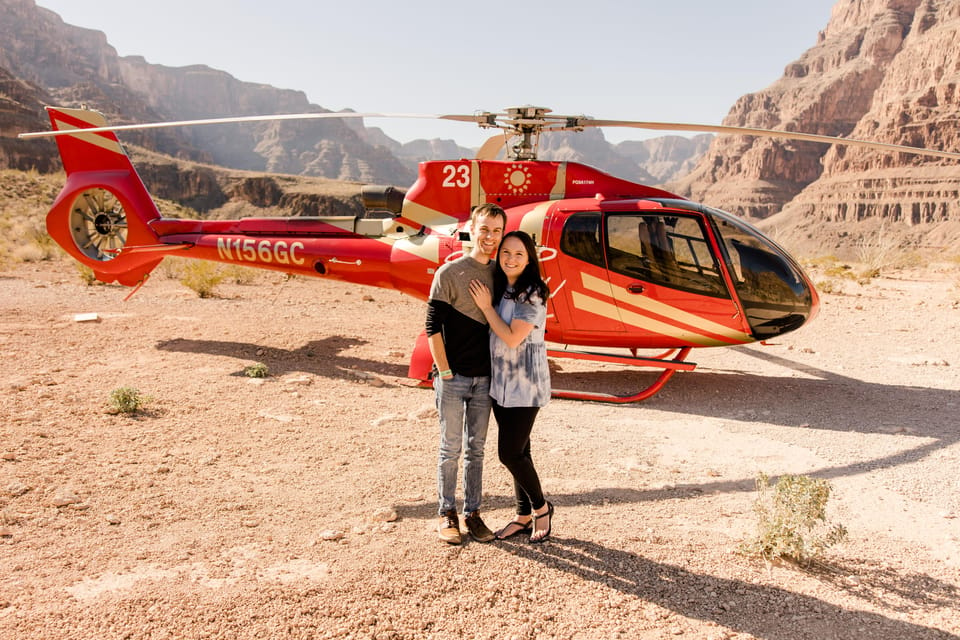
Age is a poor shortcut for choosing a Grand Canyon excursion. One traveller wants to walk between viewpoints; another can walk comfortably but dislikes long periods in a vehicle. A third needs help with steps. Those are different requirements, and a tour advertised for seniors does not automatically answer any of them.
Start with the part of travel that tires you most. Then compare sitting time, boarding and the amount of walking at each stop. Our tour-type overview explains the basic formats; this guide is about choosing a manageable day without assuming that every older visitor has the same needs.
Compare the whole outing, not just the headline attraction
The following examples come from our GetYourGuide selection on 12 September 2026. Starting fares are comparison figures; the option and date determine what you pay.
| Excursion | Starting price | Listed duration | First question to ask |
|---|---|---|---|
| Grand Canyon West bus with Hoover Dam | €85.26 | 10 hours | How long between usable breaks? |
| Grand Canyon West airplane with transfer | €184.30 | 4 hours | How do I board the aircraft? |
| Helicopter landing with hotel transfer | €421.14 | 4.5 hours | What is required for boarding and the ground stop? |
| Grand Canyon with Antelope and Horseshoe Bend | €342.77 | 17 hours | Do I actually want this much travel? |
A four-hour flight excursion is not four hours in an aircraft. It also includes the airport and transport process. Conversely, a ten-hour bus outing is not ten hours without stopping. The practical question is how the time is divided and whether those intervals suit you.
The bus: lower cost, a longer shared day
The West Rim bus review covers the popular ten-hour product with two meals. It is a sensible comparison for someone who wants to stand at canyon viewpoints and would rather avoid flying. The schedule belongs to the group, though, so do not assume you can ask to return to Las Vegas after the first stop.
Before booking, request the longest continuous drive, whether the assigned vehicle has a usable toilet, and the walking distance from the stopping point to each view. Ask whether a meal stop involves standing in a queue. “Lunch included” answers a cost question, not a comfort question.
An onboard toilet, if confirmed, is not necessarily easy for someone who finds moving in a vehicle difficult. Describe what you need rather than accepting a yes-or-no answer about facilities. If the operator cannot explain the arrangement, compare another departure before committing your day.
The plane: less time away, with an aircraft entrance to consider
The four-hour airplane excursion is an aerial experience over Grand Canyon West, not a ground visit at the viewpoints. That can suit a traveller whose priority is seeing the landscape without a long road day. It disappoints someone who wants to step out at the rim.
Do not infer easy boarding from the word plane. Ask about steps, assistance and carrying a walking aid. Confirm the arrangements for the actual aircraft and transfer, rather than relying on accessibility information for the airport building alone. A short tour can still contain the one movement that is difficult for you.
If the view from a window is enough, this option provides a useful middle price between the bus and a helicopter landing. If it is not, paying more for a shorter excursion will not fix the mismatch.
The helicopter: the landing needs its own questions
The landing-flight comparison covers popular products with different departure points and transfers. A shorter advertised total may reflect a different starting point, not simply faster service. Compare the time from your hotel before deciding which flight saves the most effort.
Ask how you enter the helicopter, what happens to mobility aids and what the ground surface is like at the landing. Also ask whether you can remain with your travelling companion during boarding and seating. Do not book on an assumption of adjacent seats or a particular position in the cabin.
For two people, the transfer-inclusive example starts at €842.28. The extra money buys a different excursion, not a general guarantee of comfort or suitability. If you have personal medical questions about flying, discuss them with your doctor and check the operator’s participation conditions.
National park access is not tour-bus access
For a South Rim visit, the National Park Service accessibility page says its park shuttles have ramps and wheelchair spaces. It also states equipment-size limits and notes that most mobility scooters do not fit. These are the park’s vehicles; the information does not establish access to a commercial bus leaving Las Vegas.
Ask the excursion operator to confirm the complete chain: pickup vehicle, boarding, stops and return. If you use a wheelchair or scooter, give its dimensions and explain whether you can transfer to a seat. Request written confirmation for the exact booking. A park-level accessibility statement should never be stretched into a promise for the whole day.
Leave room for a slower day
The seventeen-hour combined canyon trip is a poor default if you want generous breaks. That is a judgement about the itinerary, not an age restriction. Someone who enjoys a full sightseeing schedule may still choose it; someone wanting an unhurried afternoon should not feel obliged to collect every destination.
Choose one landscape you care about, ask the unresolved practical questions, and keep the evening after the excursion flexible. If none of the replies fits your needs, compare a shorter Hoover Dam outing before browsing more Grand Canyon tours. The useful upgrade is the arrangement that solves your particular difficulty.


